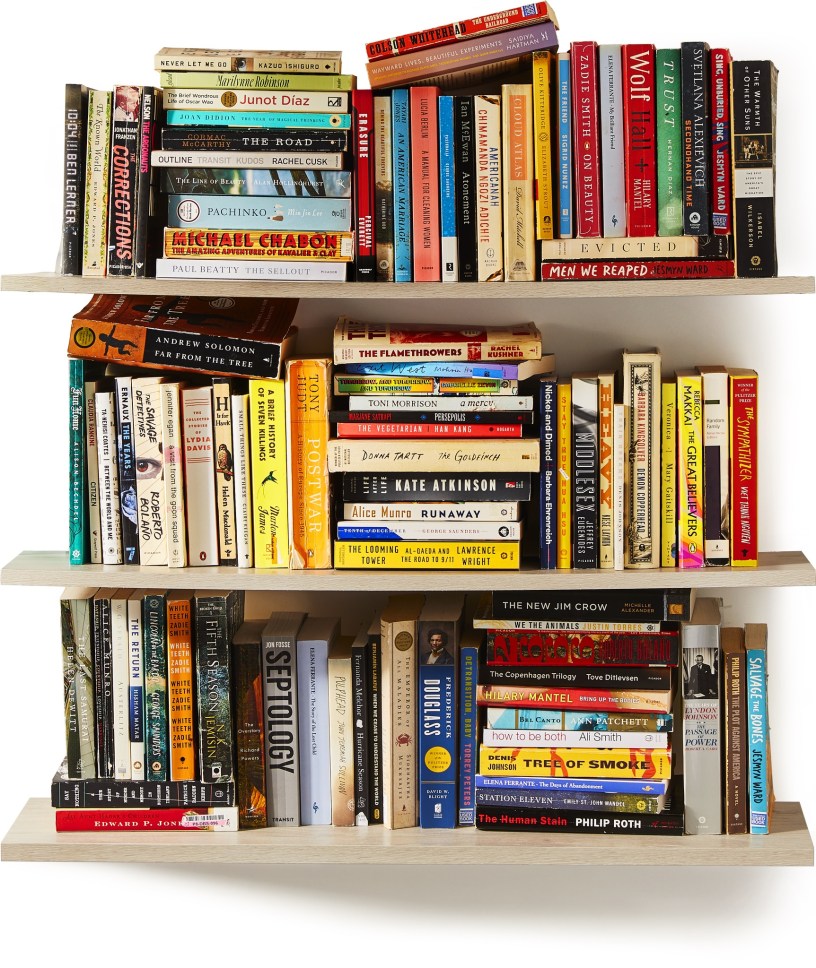
In July 2024, the New York Times published a twenty-four-year retrospective on the book publishing market by compiling its list of the top 100 books printed in the 21st Century.
The New York Times book review team undertook a meticulous process, sending “a survey to a diverse group of literary figures, including novelists, nonfiction writers, academics, book editors, journalists, critics, publishers, poets, translators, booksellers, librarians, and other literary luminaries.” They were asked to pick their ten best books of the 21st century, limited to books published since January 1, 2000, in English and commercially available in the United States, generating a long list for further consideration. From this list, the staff further queried the respondents to winnow down the recommendations into the final 100 books.
Despite the seemingly broad input base, there is a striking absence. No fiction or non-fiction books on the American Revolutionary Era, a period that has seen a surge in scholarly productivity in the twenty-first century, made the final cut. This paradox is most curious, given that trade and academic publishers brought to market over fifty-five books in this era last year alone.
In a 2017 study, the Journal of the American Revolution (JAR) assessed that sixty of the one hundred top revolutionary-era books of all time were published in this century.
While there can be presentist bias, Revolutionary Era research quality has dramatically improved with electronic archival access and increased availability of edited primary sources. So, it is unsurprising that many books published in the last twenty-four years are listed among JAR’s top books of all time.
More surprising is that no Revolutionary Era books are on the New York Times list. There have been some excellent, well-received books that could have been included. Highly influential and commercially successful books listed chronologically include:
- McCullough, David G. John Adams. New York: Simon & Schuster, 2001.
- Chernow, Ron. Alexander Hamilton. New York: Penguin Press, 2004.
- Fischer, David Hackett. Washington’s Crossing. Pivotal Moments in American History. Oxford, England; New York: Oxford University Press, 2004.
- Gordon-Reed, Annette. The Hemingses of Monticello: An American Family. 1st ed. New York: W.W. Norton & Co, 2008.
- Van Buskirk, Judith L. Standing in Their Own Light: African American Patriots in the American Revolution. Campaigns and Commanders, volume 59. Norman: University of Oklahoma Press, 2017.
- Larson, Edward J. American Inheritance: Liberty and Slavery in the Birth of a Nation, 1765-1795. First edition. New York: W.W. Norton & Company, 2023.
- Barbier, Brooke. King Hancock: The Radical Influence of a Moderate Founding Father. Cambridge, Massachusetts: Harvard University Press, 2023.
- Smith, John L. Unexpected Abigail Adams: A Woman Not Apt to Be Intimidated. Yardley, PA: Westholme Publishing, 2024.
Based on Amazon sales rankings, all these books are commercially successful, with the John Adams and Alexander Hamilton biographies continuing to be top sellers. Remarkably, four of the seven authors have received Pulitzer Prizes. The John Hancock and Abigail Adams biographies present fascinating new interpretations overlooked by preceding historians.
For those interested in historical fiction, there are several terrific choices, including:
- Marcil, Kiersten. Witness to the Revolution. Champagne Book Group, 2022.
- Baker, Salina. The Line of Splendor: A Novel of Nathanael Greene and the American Revolution. Culper Press, 2023.
The New York Times’ omission of the Revolutionary Era scholarship is a vital and glaring oversight. Understanding how society has evolved is critical to discerning why things are what they are today. Readers interested in learning how America came to be and why our society is what it is today should consider one or more of the superb Revolutionary works cited above.
Discover more from Researching the American Revolution
Subscribe to get the latest posts sent to your email.
