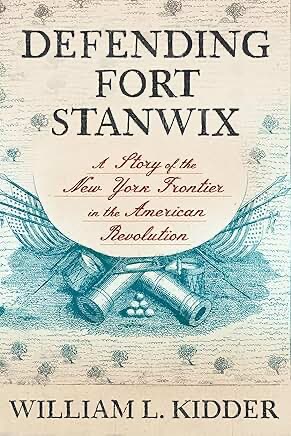
Kidder, William L. Defending Fort Stanwix: A Story of the New York Frontier in the American Revolution. Ithaca and London: Three Hills, an imprint of Cornell University Press, 2024.
Book Review
Nearly all British assaults on Rebel’s standalone fortresses during the American Revolution ended in defeat for the Americans. Case in point are the British captures of Fort Ticonderoga, the “Gibraltar of the Americas” in the Champlain Valley, and New York City’s Fort Washington, guarding the Southern gateway to the Hudson Valley. Fort Stanwix, a lesser-known but equally vital military post, is one of the few Rebel forts to withstand a British siege. Larry L. Kidder, in his new book, Defending Fort Stanwix, chronicles the stronghold’s story and its successful 1777 defense.
A British-built fortification stood guarding a portage route between Lake Ontario and Mohawk River, dating back to the French and Indian War period. After the outbreak of revolutionary hostilities in 1775, the American Rebels sent a Continental Army regiment, the Third New York, to revitalize and garrison the decaying fortress. Rebuilding the remote fort was an arduous duty. The defensive walls and buildings had severely deteriorated, requiring extensive reconstruction. Raiding Indians, poor engineering oversight, and untrained soldiers significantly hampered renovations and improvements. Under the command of Col. Peter Gansevoort and Lt. Col. Marinus Willet, the soldiers built new barracks, a bomb-proof (to store gunpowder), fighting positions, and upgraded defensive structures.
In the summer of 1777, the British launched a two-pronged attack from Canada to capture the Hudson and Mohawk Valleys, severing New England from the rest of the colonies. Gen. John Burgoyne led the main British force down from Canada and quickly captured Fort Ticonderoga, opening the Hudson Valley to invasion. Lt. Col. Barrimore Mathew “Barry” St. Leger commanded the second, smaller prong, which navigated Lake Ontario west to the Oswego River. From this point, the British paddled upstream to Lake Oneida, traversing the lake to its eastern inlet, Wood Creek. A well-established portage, called the Oneida Carrying Place, a two to six mile carry depending upon season, linked the headwaters of Wood Creek with the Mohawk River. Fort Stanwix stood guarding the portage, preventing an invasion force from entering the prosperous and strategically vital Mohawk Valley and opening a western water route to Albany. The incompletely prepared and supplied stronghold was the only obstacle preventing St. Leger from joining forces with Burgoyne.
Fortunately for the Rebels, St. Leger believed his force could easily breach the fort’s defenses and did not bring heavy cannons. As a result, the British dug siege lines to get their few guns closer and potentially undermine the fort walls with explosives. Hearing of the British advance, local militia mustered to the garrison’s defense. St. Leger’s native and Loyalist forces ambushed the relief force, preventing it from coming to the fort’s defense. Known as the Battle of Oriskany, it was one of the bloodiest battles per participant of any engagement during the war. Despite not receiving assistance from the militia relief force, the intrepid Willet led a sally from the fort, ravaging the undefended British camp and capturing food, military stores, and arms. The resulting loss of supplies and personal effects demoralized the British/Native force. Rebel commanders in Albany launched another relief force under the leadership of Maj. Gen. Benedict Arnold. Upon hearing exaggerated reports of its size, the British lifted their siege and retreated to Canada. As a result, Fort Stanwix became the only significant American fort to withstand a British Army attack.
After the defeat of St. Leger, the Third New York Regiment’s duty devolved into seemingly unending and mundane activities, including reconstructing fortifications, guarding food and supply transports, and scouting duties. The fort’s soldiers continued to feel surrounded and isolated as Indian attacks continued against those who ventured outside the gates. The fort remained garrisoned for another four years before being decommissioned as the invasion threat from Canada diminished.
The author provides a more complete picture of military life at and around Fort Stanwix than just battles and skirmishes. Kidder recounts individual stories of numerous Rebel (and some British) soldiers who deserted. These men left their posts for many reasons, including fear of being captured and poorly treated by Indians or to return home. Others disappeared without permission after receiving enlistment bounties, hoping to re-enlist in another regiment for an additional bounty. At times, the continual stream of deserter names, their reason for deserting, and their subsequent activities seem repetitive. Still, the substantial number of deserters is an unvarnished, untold account that makes Kidder’s book essential in learning the difficulties faced by officers and the perspectives of men within the ranks.
Kidder addresses another under-conveyed story. Allied with the Rebels, the Oneida and Tuscarora Nations provided valuable assistance to the Fort Stanwix defenders before and during the British siege. Warriors from the two allied nations performed critical scouting missions, small unit attacks, and communications services. Additionally, the Rebel-friendly Indians fought effectively against their former allied Haudenosaunee Nations during the Battle of Oriskany. While Fort Stanwix remained intact, the British and Native Nation invaders decimated the nearby Oneida and Tuscarora towns, destroying homes and food supplies. Kidder reports that at the war’s outset, many Indians enjoyed a higher standard of living than European heritage settlers in other places in the valley. To the extent within his means, Col. Gansevoort provided emergency rations to the Indians, but their communities and prospects would not fully recover from the war’s disastrous effects.
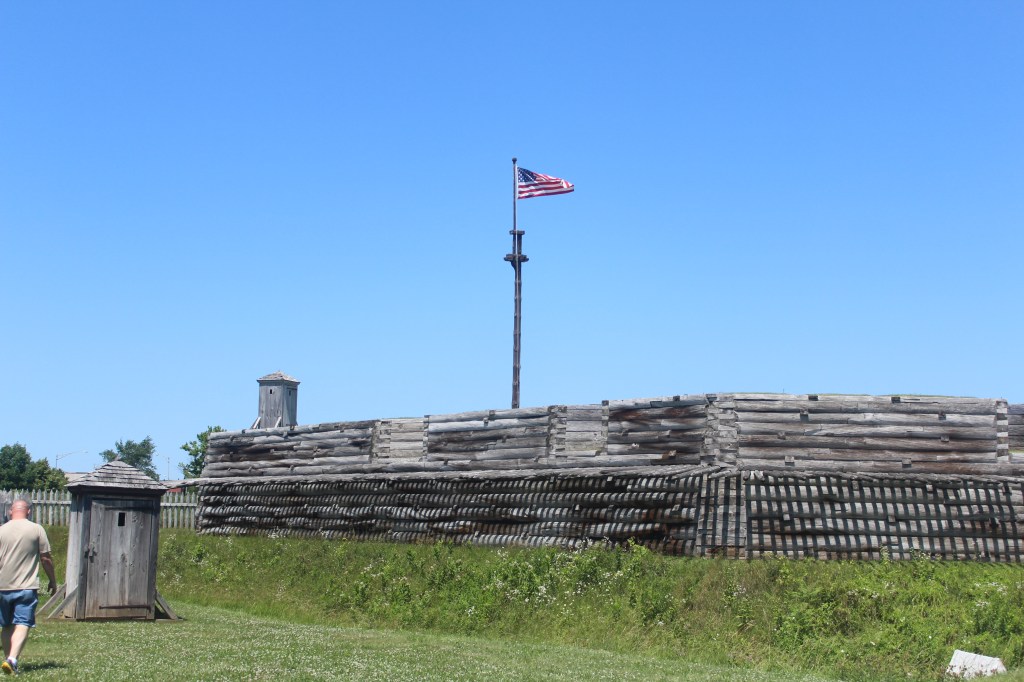
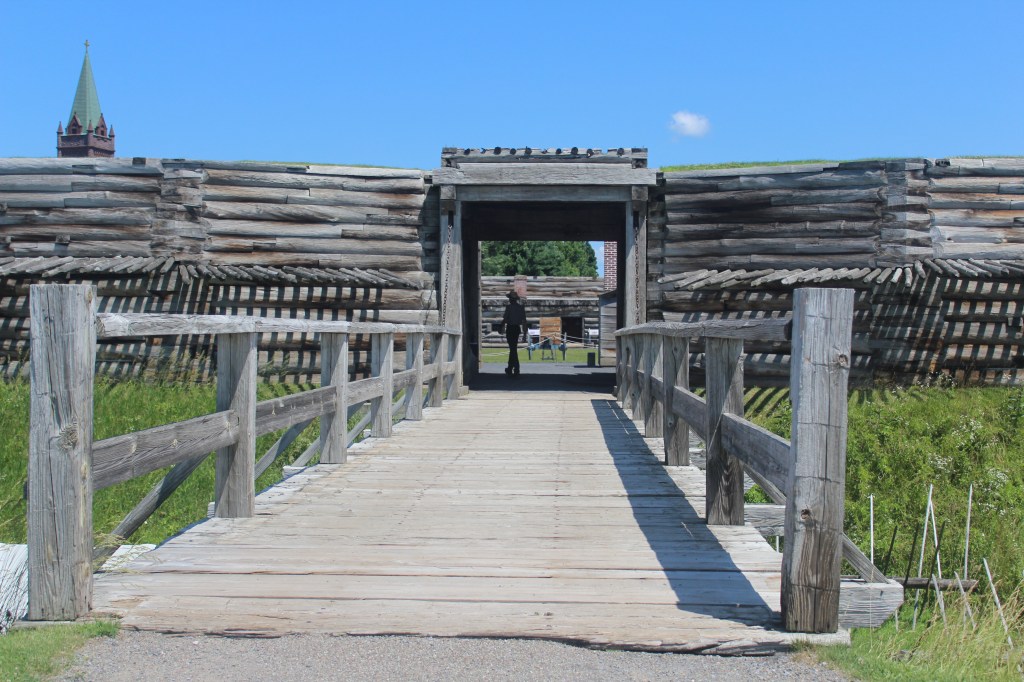
The author concludes with an accounting of life after the military for many of Fort Stanwix’s defenders. Col. Gansevoort leveraged his organizational skills into a successful business career. Lt. Col. Willet resumed his merchant career in New York City, rising in prominence and being elected mayor of New York. Tragically, Mohawk Valley settlers’ deep and indiscriminate anger towards Indians destroyed the Oneida Nation’s post-war prospects. Today, only tiny slivers of Oneida Land remain. Fort Stanwix enjoyed a better fate. In 1974, the National Park Service reconstructed the fort on sixteen acres in Rome, New York. I highly recommend a visit.
Readers learn about the grit and determination of the fortress’s occupants, which led to their successful defense against a formidable adversary. However, Kidder’s account is more than simply celebrating the “fort that never surrendered.” He provides a more complete chronicle. Events in and around Fort Stanwix demonstrated that not everyone shared equally in victory, and a thin line existed between patriots and loyalists, which wavered as prospects ebbed and flowed. Bringing untold stories to life, adding complexity, substories, and individual histories makes Defending Fort Stanwix an engaging narrative.
Discover more from Researching the American Revolution
Subscribe to get the latest posts sent to your email.
