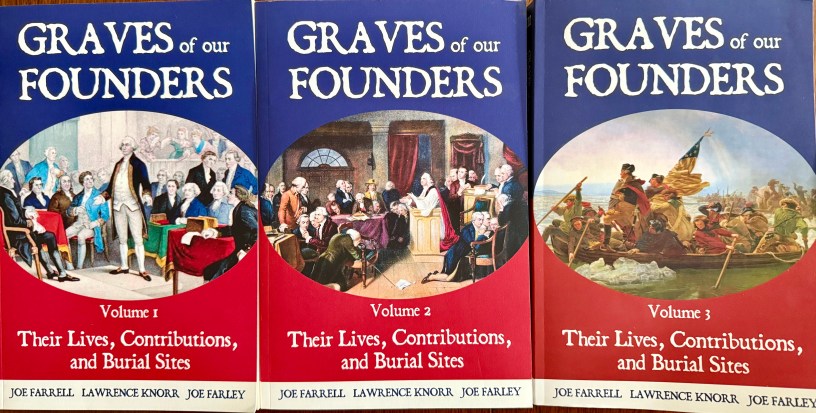
Knorr, Lawrence, Joe Farrell, and Joe Farley. Graves of Our Founders: Their Lives, Contributions, and Burial Sites. Vol. 1. 4 vols. Sunbury, PA: Sunbury Press, Inc., 2018.
———. Graves of Our Founders: Their Lives, Contributions, and Burial Sites. Vol. 2. 4 vols. Sunbury, PA: Sunbury Press, Inc., 2021.
———. Graves of Our Founders: Their Lives, Contributions, and Burial Sites. Vol. 3. 4 vols. Sunbury, PA: Sunbury Press, Inc., 2024.
Book Reviews
While exploring historical sites, never pass up investigating a nearby graveyard.
A historian trio demonstrates the above maxim by delivering interesting perceptions of the lives and burial sites of Revolutionary Era founders in three volumes of an anticipated four-volume compendium. Graveyards are primary sources reflecting the remembered legacies of their residents at the time of burial and continue to provide insights into their lives and contributions. In the introduction to each volume, the authors quote Roman statesman and lawyer Marcus Cicero: “Poor is the Nation having no heroes; shameful is the one that having them forgets.” Visiting cemeteries is an invaluable aid to understanding our past.
In volumes one through three, the authors chronicle the lives and gravesites of about three-fourths of the planned 200 founders. While the founders’ designation can be controversial, the trio’s definition encompasses a wide range of people from the Revolutionary Era, including politicians, military officers, women, African Americans, and authors. Each founder has a chapter presenting an overview of their life, contributions, legacies, and gravesites.
Readers will be familiar with many founders but meet lesser-known but fascinating contributors to our national development. An example is Haym Solomon, who helped finance the pivotal Yorktown campaign when Congress’s treasury was empty. The authors assert, “It is not an exaggeration to state that without his assistance, the chances of the American Revolution ending would have been greatly diminished.”
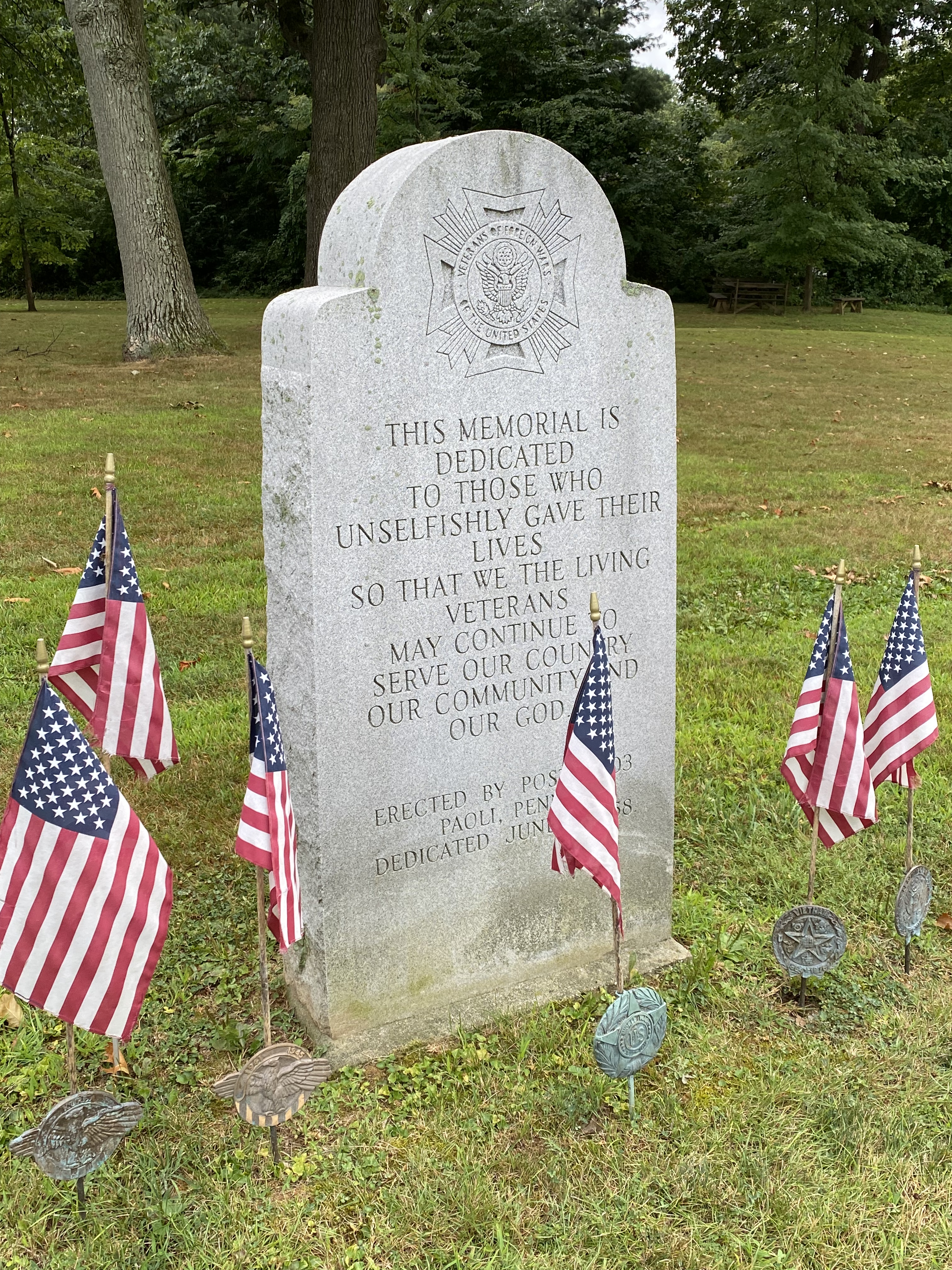
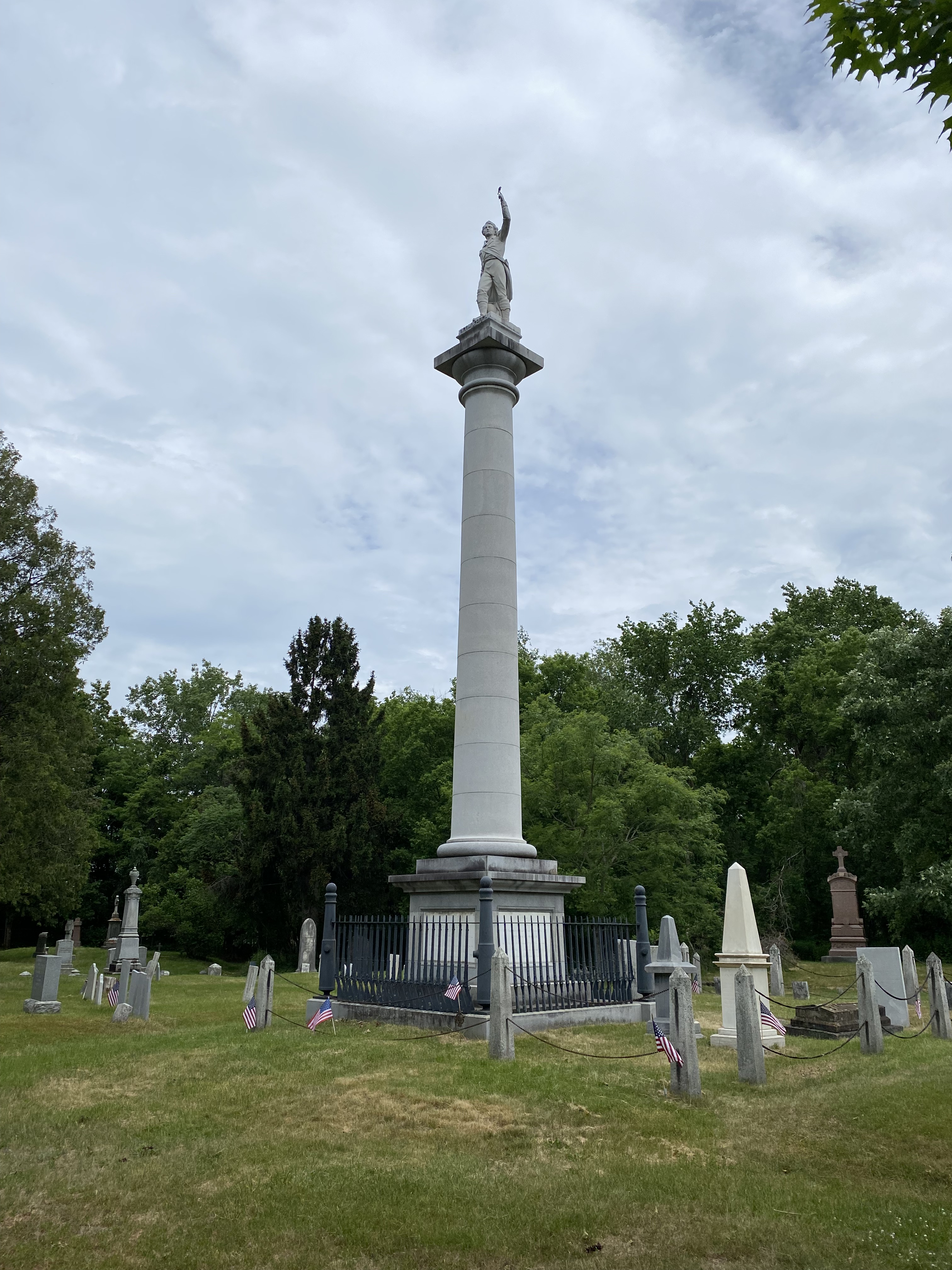
Knorr, Farley, and Farrell visited each of the founders’ gravesites. The book contains photos and memorial observations by the authors. The authors rate each grave site on a scale of zero to four for its location, accessibility, condition, maintenance, and memorialization. Only eight of the over 150 graves evaluated met the authors’ standards for properly recognizing a founder. Even some elaborate gravesites don’t pass muster. An example is an impressive equestrian statue on a large plinth on top of Isreal Putnam’s final resting place, which suffers from location and maintenance deficiencies.
Unfortunately, many graves are neglected, poorly maintained, or have been partially destroyed. For example, the grave maker of Eliphalet Dyer, a Connecticut signer of the Continental Association, is listed to one side with a faded inscription, and the gravestone denoting Cyrus Griffin, the last president of the Confederation Congress, is non-descript and decrepit. Other burial sites, such as African American spy James Armistead Lafayette, Congressmember Edward Langworthy, and Yale spy Nathan Hale, have been lost to history. Interestingly, the cemetery containing New York politician and later United States Supreme Court Justice John Jay’s remains is ringed with barbed wire and is only open to the public once a year.
Historians should skeptically verify information from gravesites and memorials as with any primary source. The authors cite a memorial to New York’s Henry Wisner as an example. A monument in Goshen, New York, asserts that Wisner was the only New York delegate to sign the Declaration of Independence, but the authors provide clear evidence that this was not the case. Again, Wisner’s gravestone in Phillipsburg, New York, is in a state of neglect and disrepair.
How we remember and memorialize our founders indicates the value society places on their lives and contributions. Joe Farrell, Lawrence Knorr, and Joe Farley make a strong case that we owe a great deal to the founders and should better care for their final resting places and memorials. Perhaps historically mined readers will be energized to visit nearby Revolutionary Era graveyards and help restore proper remembrances of the country’s founders.


Discover more from Researching the American Revolution
Subscribe to get the latest posts sent to your email.
