Who are America’s Founders?
A more holistic and inclusive definition of who is a founder is emerging among Revolutionary Era scholars and their readers.
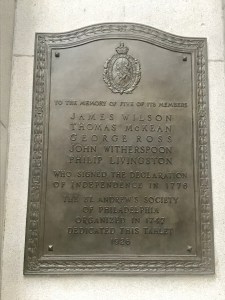
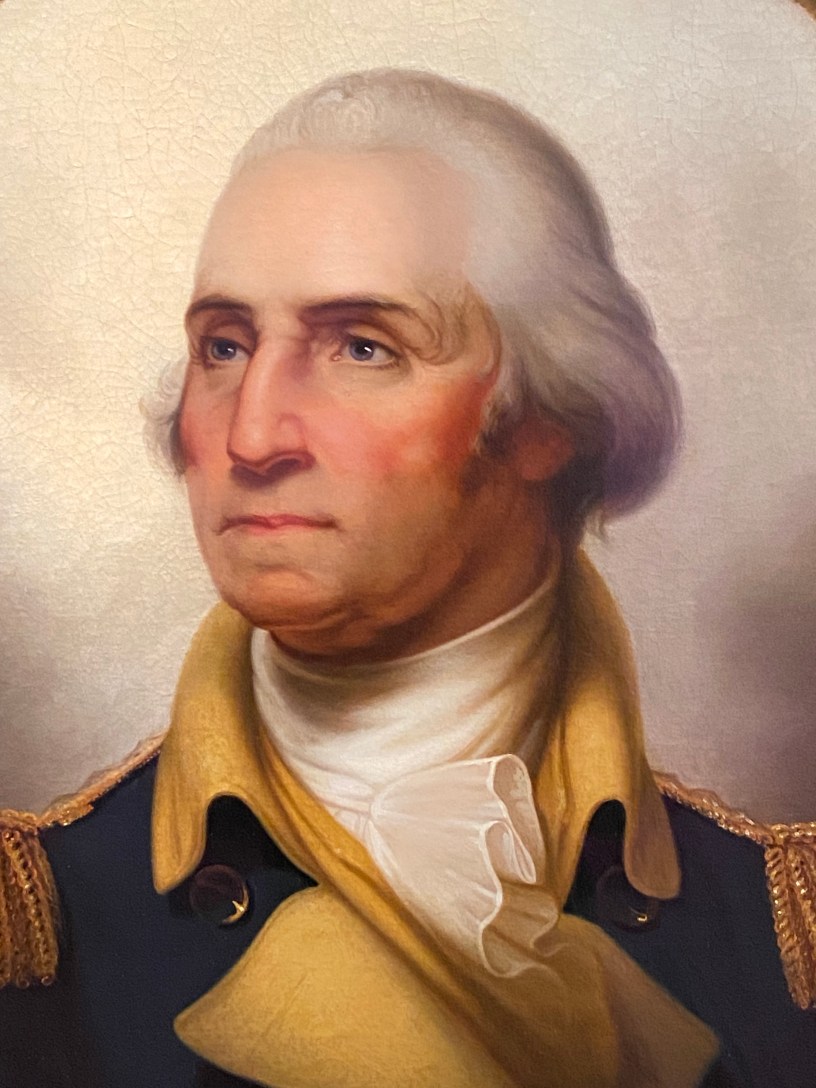
Traditionally, historians and the general public regarded the men who signed the 1776 Declaration of Independence, served in the Continental Congress, or fought in the American Revolution to be founding fathers. Most notably pre-twenty first-century history books refer to George Washington as the father of his country. In some cases, founders refer to the men who signed the Declaration of Independence.
However, today “founders” has replaced “founding fathers” in our lexicon to denote the place of women in America’s founding properly. Further, under-represented groups such as African-Americans and Native Americas are recognized as founders. Lastly, the founders’ definition includes all those who contributed to our country’s development regardless of income, social status, race, or gender.
Books on Founders
Larry P. Arnn, The Founders’ Key: The Divine and Natural Connection between the Declaration and the Constitution and What We Risk by Losing It (Nashville: Thomas Nelson, 2012)
Bernard Bailyn, The Ideological Origins of the American Revolution, Fiftieth anniversary edition (Cambridge, Massachusetts: The Belknap Press of Harvard University Press, 2017)
Michael Barone, Mental Maps of the Founders (New York, N.Y.: Encounter Books, 2024)
Alexis Coe, You Never Forget Your First: A Biography of George Washington (New York: Viking, 2020).
Cogliano, Francis D. A Revolutionary Friendship: Washington, Jefferson, and the American Republic. Cambridge, Massachusetts: Harvard University Press, 2024.
Daniel L. Dreisbach and Mark David Hall, eds., Faith and the Founders of the American Republic (New York: Oxford University Press, 2014)
Joseph J Ellis, American Creation: Triumphs and Tragedies at the Founding of the Republic (New York: Vintage Books, 2008)
Ellis, Joseph J. The Great Contradiction: The Tragic Side of the American Founding. First edition. Alfred A. Knopf, 2025.
Washington Independent Review of Books Review –https://www.washingtonindependentreviewofbooks.com/bookreview/the-great-contradiction-the-tragic-side-of-the-american-founding
Andrew Farmer. Ordinary Greatness: A Life of Elias Boudinot (American Bible Society, 2022).
Lorri Glover, Founders as Fathers: The Private Lives and Politics of the American Revolutionaries (New Haven: Yale University Press, 2014)
Woody Holton, Forced Founders: Indians, Debtors, Slaves, and the Making of the American Revolution in Virginia (Chapel Hill: Published for the Omohundro Institute of Early American History and Culture, Williamsburg, Virginia, by the University of North Carolina Press, 1999)
Bruce E. Johansen, Forgotten Founders: Benjamin Franklin, the Iroquois, and the Rationale for the American Revolution (Ipswich, Mass: Gambit, 1982)
Mark E. Kann, A Republic of Men: The American Founders, Gendered Language, and Patriarchal Politics (New York: New York University Press, 1998)
Thomas S. Kidd, Patrick Henry: First among Patriots (New York: Basic Books, 2011)
Eli Merritt, Disunion among Ourselves: The Perilous Politics of the American Revolution (Columbia: University of Missouri Press, 2023)
William P. Murchison, The Cost of Liberty: The Life of John Dickinson, Lives of the Founders (Wilmington, DE: ISI Books, 2013)
John M. Murrin and Andrew Shankman, Rethinking America: From Empire to Republic (New York, NY: Oxford University Press, 2018)Craig Bruce Smith, American Honor: The Creation of the Nation’s Ideals during the Revolutionary Era (Chapel Hill: University of North Carolina Press, 2018)
Stahr, Walter. John Jay: Founding Father. London: Bloomsbury, 2013.

First time author and lawyer Walter Stahr presents a strong case that New Yorker John Jay is one of he most under-appreciated revolutionary leaders. Despite not signing the Declaration of Independence nor the US Constitution, Jay was instrumental in negotiating the 1783 Treaty of Paris ending the American Revolution. Later in life, John Adams, a first-person observer credited Jay with the treaty’s favorable terms. Likewise Jay was the principal drafter of the 1777 New York State Constitution and made valuable contributions to the 1787 US Constitution. In Washington’s administration, Jay served as a chief justice of the Supreme Court and negotiated the eponymous 1796 treaty with the British which avoided war. While Stahr points out Jay’s contributions, he also highlights several character flaws. Jay descended from a French Huguenot family and retained a strong prejudice against the Catholic faith. The author also points out that Jay founded the New York Manumission Society while owning enslaved people.
While not a flaw, after serving two terms as New York’s governor, Jay retreated to a rural Bedford, NY farm, intensely reflecting on his religious beliefs with few correspondents. He did not attempt to burnish his image and highlight his contributions through memoirs or letters as did other revolutionaries.
While today, Jay’s name is relatively unknown, he formed deep relationship and earned the respect of the most influential founders including George Washington, Alexander Hamilton, Thomas Jefferson and John Adams. With the exception of James Madison, Jay was most successful in “working across the aisle” with those of different opinions. Stahr ends with Jay’s most important contribution. When Hamilton asked Governor Jay to change the way the New York legislature assigns its votes in the electoral college to favor John Adams, he refused to make post hoc changes preserving a fair election.
I recommend Stahr’s biography to all those interested in reading about a highly accomplished politician with high integrity who worried more about making contributions rather than fame or pecuniary rewards.
After his Jay biography, Stahr authored three biographies of Abraham Lincoln’s cabinet: William Henry Seward (2012), Edwin Stanton (2017) and Salmon Chase (2022). He is working on a fifth book, a life of William Howard Taft.
