Overview
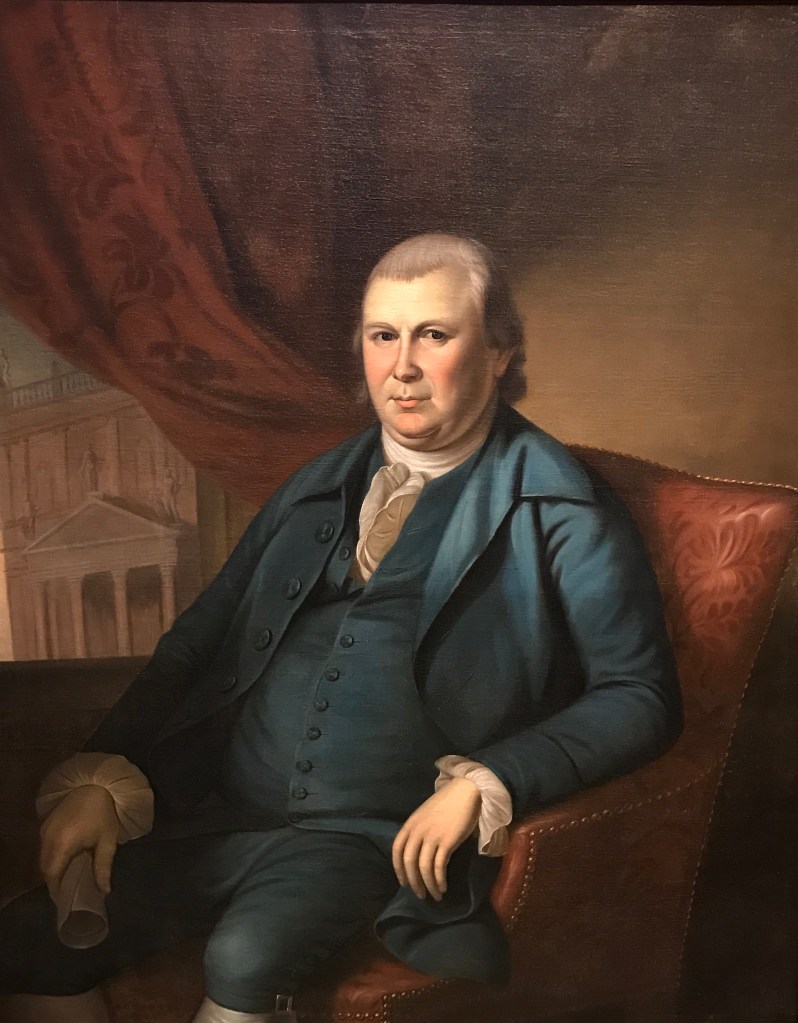
Robert Morris (1734–1806) was a foundational figure in the financial architecture of the United States and played a critical role in the success of the American Revolutionary War. Born in Liverpool, England, Morris immigrated to the American colonies, where he became a prosperous merchant in Philadelphia, Pennsylvania. His acumen in business and finance soon propelled him into the center of colonial politics, where he became an ardent supporter of American independence. As a delegate to the Second Continental Congress, Morris was a signatory of the Declaration of Independence, and his leadership in financial matters earned him the unofficial title of “Financier of the Revolution.” His innovative methods in securing funding and supplies were instrumental in sustaining the Continental Army during critical phases of the war.
Following the revolution, Morris’s contributions to the nascent United States continued to be profound. He was a key figure in the creation of the financial system of the new nation, including the establishment of the Bank of North America, which was the precursor to the modern American banking system. Despite declining the position of Secretary of the Treasury, Morris’s influence on the economic policies of the early United States was significant, and his work laid the groundwork for future financial stability and growth. However, his post-war life was marked by financial difficulties, leading to a period of debt imprisonment. Despite these personal setbacks, Robert Morris’s legacy as a patriot and a financial pioneer remains integral to the story of American independence and the establishment of its economy.
Introductory Sources
Aubrecht, Michael. The Letters of Robert Morris: Founding Father and Revolutionary Financier. Heritage Books, 2025.
Veteran author Michael Aubrecht rightly points out in his new book that historians and the general public underappreciate the contributions of Robert Morris during the Revolutionary Era. Over the two hundred years since the death of the Pennsylvania business and political leader, he has been the subject of only six biographies. His “rags to riches to rags” is remarkable, providing timeless lessons on public service, entrepreneurship, and risk-taking. To whet readers’ appetites, Aubrecht writes an introductory text that chronicles Morris’s financial and political support during the Revolution and the early Republic.
The author notes that Morris provided Washington and the Continental Army valuable financial support, which funded the pivotal campaigns in New Jersey and Yorktown. In addition to his business acumen, Aubrecht recognizes that Morris was one of only two people to sign the Declaration of Independence, the Articles of Confederation, and the U.S. Constitution. Like a Greek tragedy, Morris falls from a lofty perch, ending up in Debtors’ prison, and dying destitute.
As many readers will want to delve deeper, Aubrecht includes the complete corpus of Morris’s correspondence between 1776 and 1802. Robert Morris wrote over 250 letters to nearly every prominent figure of the Revolutionary and Founding periods of American History. The most frequent recipients were George Washington (67), Benjamin Franklin (43), and Alexander Hamilton (35). The earliest letter listed is to John Jay, dated September 23, 1776, and the last is an undated letter to Thomas Jefferson, on or before January 29, 1802. While these documents are available online, readers will benefit from being able to read his letters chronologically.
The author offers a summary description of Robert Morris as “a political renaissance man” for his many contributions, several of which significantly diminished his fortune and placed his life in danger. Aubrecht’s work is a great starting point for those wishing to learn more.
Primary Sources
Manuscript Division Staff. “Robert Morris Papers: A Finding Aid to the Collection in the Library of Congress.” Manuscript Division, Library of Congress (blog), 2021. http://rs5.loc.gov/service/mss/eadxmlmss/eadpdfmss/2011/ms011193.pdf.
Morris, Robert. The Papers of Robert Morris, 1781-1784. Pittsburgh, PA: University of Pittsburgh Press, 1973.
Secondary Sources
Unger, Harlow Giles. Robert Morris: The Patriot Who Paid for Washington’s War. Independently published, 2021. (Also published as Robert Morris: Washington’s Magick Money Man in 2023).
Smith, Ryan K. Robert Morris’s Folly: The Architectural and Financial Failures of an American Founder (The Lewis Walpole Series in Eighteenth-Century Culture and History). New Haven, CT: Yale University Press, 2014.
Morris, Robert M. Robert Morris: Inside the Revolution. Walterville, OR: Trine Day, 2013
Rappleye, Charles. Robert Morris: Financier of the American Revolution. 1st Simon & Schuster hardcover [ed.]. New York: Simon & Schuster, 2010.
Oberholtzer, Ellis Paxson. Robert Morris, Patriot And Financier. New York: Chelsea House Publishing, 1983.
Sumner, William Graham. Robert Morris. Makers of America Series. New York: Dodd, Mead and Company, 1892.
Philadelphia
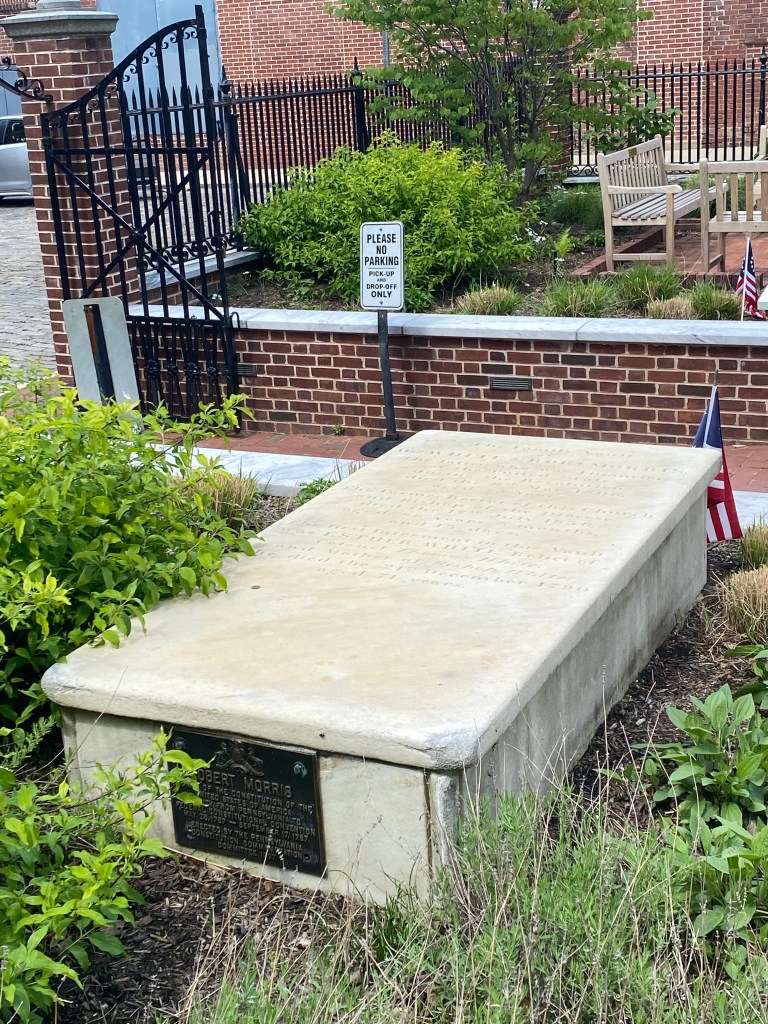

Other Robert Morris statues are located in the Philadelphia region in front of Independence Hall and at Summerseat, a home once owned by Morris. Eponymously named Robert Morris University installed a seated statue of Robert Morris in 2013.
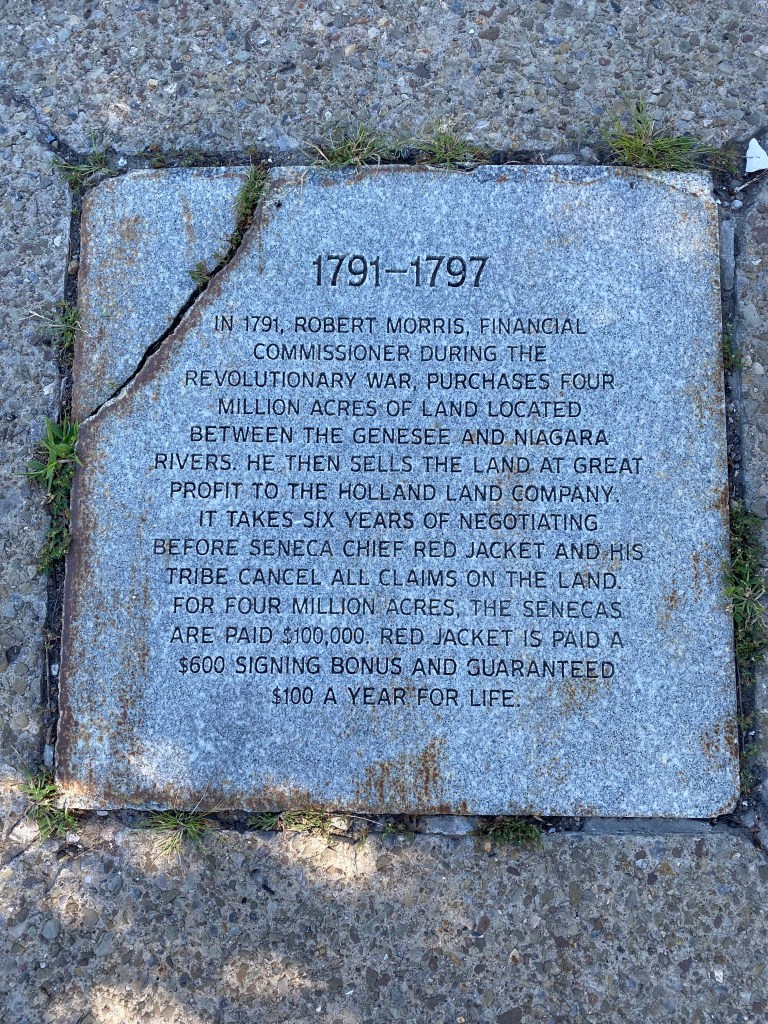
Robert Morris and the Acquisition of Land from the Seneca Nation