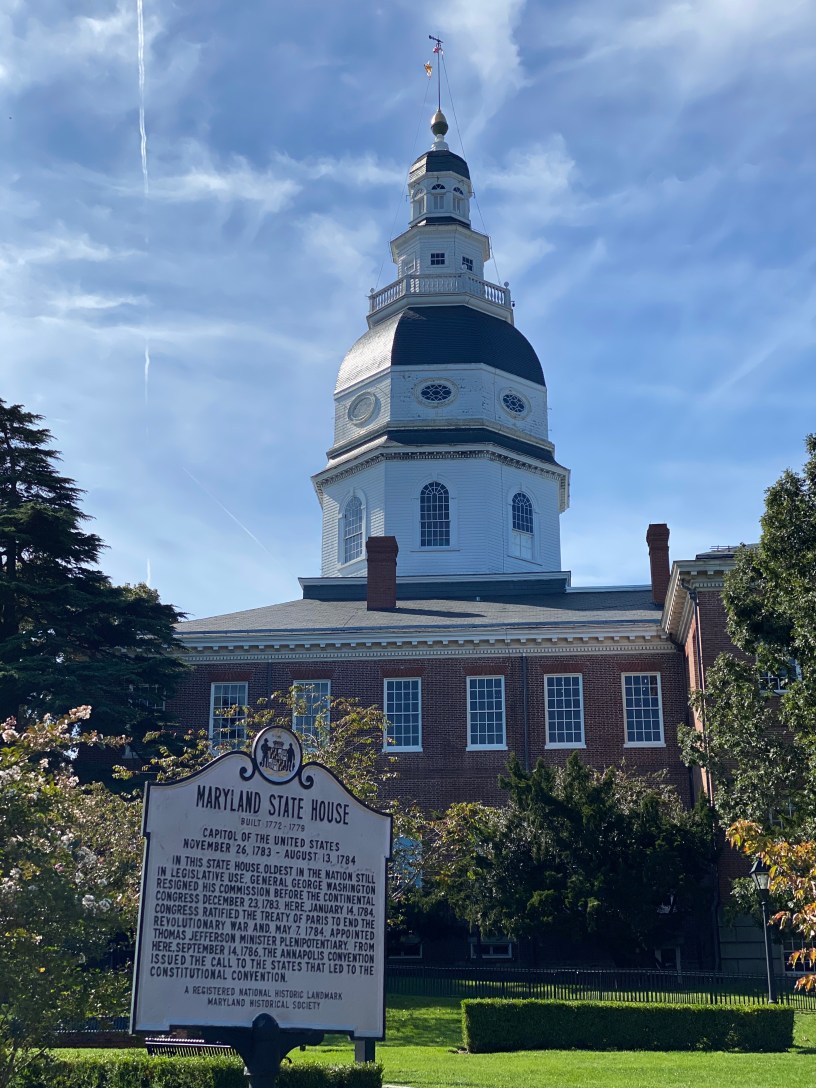
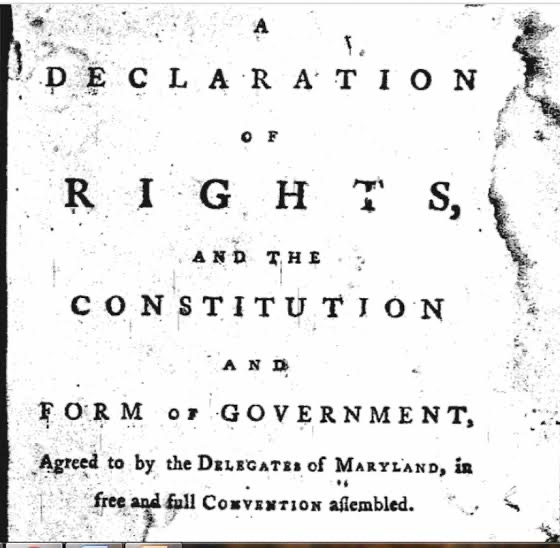
Two hundred and fifty years ago today, Maryland became the seventh state to adopt a founding constitution, replacing its rebel provisional governments. Marylanders followed the most deliberative, independent, and inclusive process to date in crafting their new government. Several notable features included:
- A special election created a 53-member Constitutional Convention independent of any future legislature.
- The Constitutional Convention included four members who professed the Roman Catholic faith, a representation not permitted under the previous Royal government.
- The convention’s first order of business was passing a declaration that the “United Colonies were free and independent states.” The people of Maryland asserted total sovereignty over the state’s affairs.
- Next, the new constitution asserted the most rights of any state: a Declaration of Rights – over four times the eventual U.S. Bill of Rights.
- Marylanders retained English Common Law and many colonial governing practices such as viva voce (voice) voting in front of the county sheriff.
- Religious provisions included a duty to worship God, a declaration in the Christian religion to hold office, a tax to support the religion of the payer’s choice, and a prohibition on gifting or selling lands to a minister or church (other than 2 acres for a place of worship and graveyard).
- The original 1776 Maryland Constitution contains approximately 8,800 words, approximately twice the length of the U.S. Constitution.
- Drafters gave delegates two months to gather input from their constituents before final enactment.
Over the decades, the document was amended roughly 66 times (notably incorporating significant reforms such as the direct election of the governor in 1837), expanding to about 15,200 words by the 1840s before it was ultimately replaced by the Maryland Constitution of 1851. Maryland’s current constitution dates to 1867.
For more information on the Maryland and other constitutions of the Revolutionary era, see:
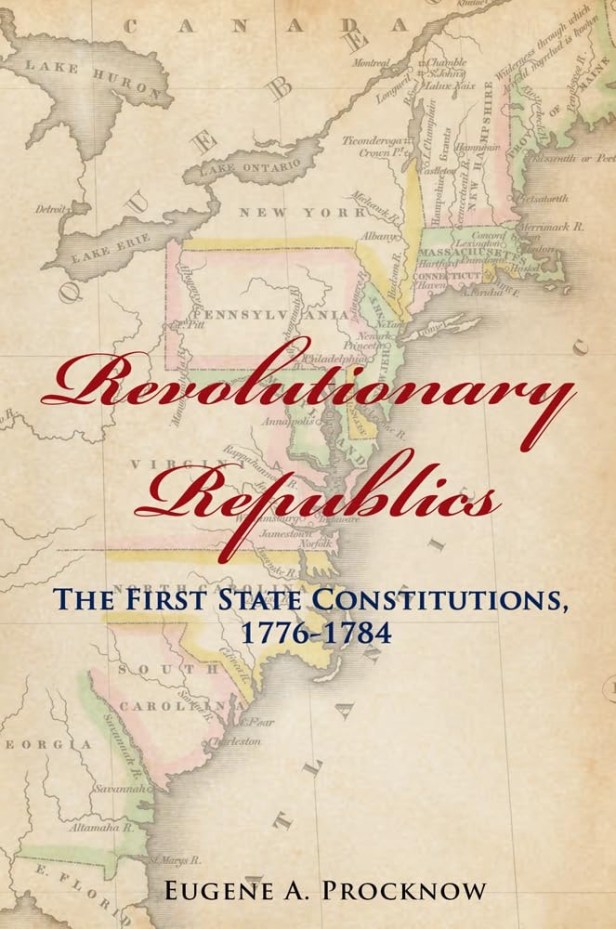
Procknow, Eugene A. Revolutionary Republics: The First State Constitutions, 1776-1784. Oxford Southern, an imprint of Sunbury Press, 2026.
For information on Eugene Procknow and his other books, click the link below.
Discover more from Researching the American Revolution
Subscribe to get the latest posts sent to your email.
